
-
×
 Evil Corporations: Law, Culpability and Regulation, 1st Edition eBook
1 × $21.00
Evil Corporations: Law, Culpability and Regulation, 1st Edition eBook
1 × $21.00 -
×
 European Tax Law, Volume 18th Edition, Full Edition eBook
1 × $44.00
European Tax Law, Volume 18th Edition, Full Edition eBook
1 × $44.00 -
×
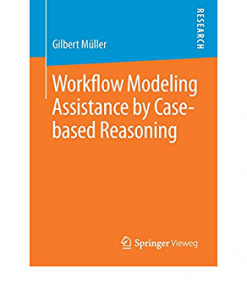 Workflow Modeling Assistance by Case-based Reasoning eBook
1 × $20.00
Workflow Modeling Assistance by Case-based Reasoning eBook
1 × $20.00 -
×
 Workers' Voice, HRM Practice, and Leadership in the Public Sector: Multidimensional Well-Being at Work, 1st Edition eBook
1 × $17.00
Workers' Voice, HRM Practice, and Leadership in the Public Sector: Multidimensional Well-Being at Work, 1st Edition eBook
1 × $17.00 -
×
 Working with Child Abuse and Neglect: A Primer, 1st Edition eBook
1 × $27.00
Working with Child Abuse and Neglect: A Primer, 1st Edition eBook
1 × $27.00 -
×
 Why Some Companies Emerge Stronger and Better from a Crisis: 7 Essential Lessons for Surviving Disaster eBook
1 × $10.00
Why Some Companies Emerge Stronger and Better from a Crisis: 7 Essential Lessons for Surviving Disaster eBook
1 × $10.00 -
×
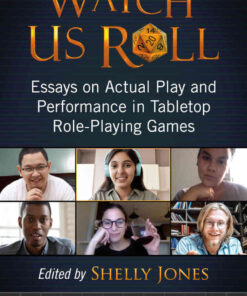 Watch Us Roll: Essays on Actual Play and Performance in Tabletop Role-Playing Games eBook
1 × $19.00
Watch Us Roll: Essays on Actual Play and Performance in Tabletop Role-Playing Games eBook
1 × $19.00 -
×
 Viewfinding: Perspectives on New Media Curriculum in the Arts eBook
1 × $75.00
Viewfinding: Perspectives on New Media Curriculum in the Arts eBook
1 × $75.00 -
×
 Why Should We Be Called ‘Coolies’?: The End of Indian Indentured Labour, 1st Edition eBook
1 × $17.00
Why Should We Be Called ‘Coolies’?: The End of Indian Indentured Labour, 1st Edition eBook
1 × $17.00 -
×
 Wars Without a Name: A History of Indian Counterinsurgency eBook
1 × $78.00
Wars Without a Name: A History of Indian Counterinsurgency eBook
1 × $78.00 -
×
 Water Governance: Challenges and Prospects eBook
1 × $27.00
Water Governance: Challenges and Prospects eBook
1 × $27.00 -
×
 Warriors after War: Indian and Pakistani Retired Military Leaders Reflect on Relations between the Two Countries, Past, Present and Future, 1st Edition eBook
1 × $49.00
Warriors after War: Indian and Pakistani Retired Military Leaders Reflect on Relations between the Two Countries, Past, Present and Future, 1st Edition eBook
1 × $49.00
Subtotal: $404.00