
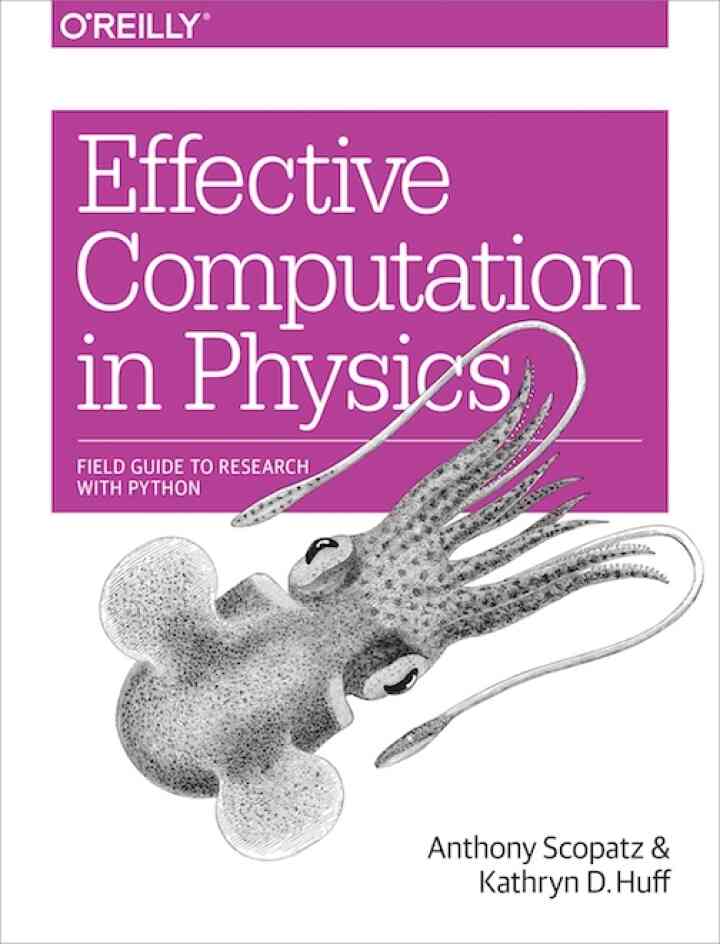
Effective Computation in Physics: Field Guide to Research with Python, 1st Edition eBook
$46.99 Original price was: $46.99.$28.00Current price is: $28.00.
-
Author(s): Anthony Scopatz; Kathryn D. Huff
-
Publisher: O’Reilly Media
-
Print ISBN: 9781491901533
-
eText ISBN: 9781491901588
Delivery: Can be download immediately after purchasing. For new customer, we need process for verification from 30 mins to 12 hours.
Version: PDF/EPUB. If you need EPUB and MOBI Version, please contact us.
Compatible Devices: Can be read on any devices.
More physicists today are taking on the role of software developer as part of their research, but software development isnâ??t always easy or obvious, even for physicists. This practical book teaches essential software development skills to help you automate and accomplish nearly any aspect of research in a physics-based field. Written by two PhDs in nuclear engineering, this book includes practical examples drawn from a working knowledge of physics concepts. Youâ??ll learn how to use the Python programming language to perform everything from collecting and analyzing data to building software and publishing your results. In four parts, this book includes: Getting Started: Jump into Python, the command line, data containers, functions, flow control and logic, and classes and objects Getting It Done: Learn about regular expressions, analysis and visualization, NumPy, storing data in files and HDF5, important data structures in physics, computing in parallel, and deploying software Getting It Right: Build pipelines and software, learn to use local and remote version control, and debug and test your code Getting It Out There: Document your code, process and publish your findings, and collaborate efficiently; dive into software licenses, ownership, and copyright procedures
This is a digital product.
Effective Computation in Physics: Field Guide to Research with Python 1st Edition is written by Anthony Scopatz; Kathryn D. Huff and published by O’Reilly Media. The Digital and eTextbook ISBNs for Effective Computation in Physics are 9781491901588, 1491901586 and the print ISBNs are 9781491901533, 1491901535. Additional ISBNs for this eTextbook include 9781491901571, 9781491901595.
Reviews
There are no reviews yet.